

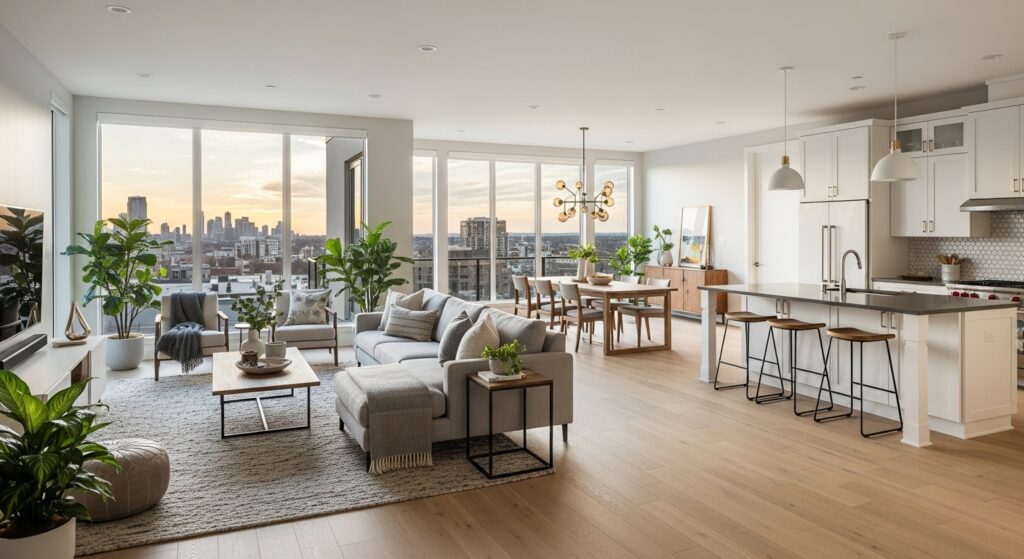
Open-plan living has become one of the most popular design choices in modern homes. By removing dividing walls, homeowners can create bright, airy, and multifunctional spaces that encourage family interaction and social gatherings. However, these open layouts come with a practical challenge: keeping such large, free-flowing spaces warm and comfortable.
This raises the question—can underfloor heating (UFH) handle the demands of open-plan living? To answer this, let’s explore how underfloor heating works, its benefits, potential challenges, and why it may or may not be the ideal heating solution for expansive open spaces.
Understanding Underfloor Heating
Before considering its suitability for open-plan layouts, it’s important to understand how underfloor heating functions. Unlike traditional radiators that heat the air around them, UFH distributes heat evenly across the floor surface, allowing warmth to rise gently throughout the room.
There are two main types of underfloor heating systems:
- Electric (Dry) Underfloor Heating:
- Uses heated wires or mats installed beneath the floor finish.
- Quicker to install but usually more expensive to run.
- Often used in smaller areas such as bathrooms.
- Uses heated wires or mats installed beneath the floor finish.
- Water (Wet) Underfloor Heating:
- Involves pipes laid under the floor, through which warm water circulates.
- Typically connected to a boiler or renewable energy source, such as a heat pump.
- More energy-efficient for larger spaces.
- Involves pipes laid under the floor, through which warm water circulates.
Both systems provide radiant heat, ensuring a consistent temperature across the room without cold spots. This makes UFH particularly appealing for large, open-plan areas.
Why Heating Open-Plan Living Areas Can Be Tricky
While open-plan living is visually appealing, it presents unique heating challenges:
- Large Surface Area: Open spaces require more energy to heat evenly.
- High Ceilings: Warm air naturally rises, which can make heating less efficient.
- Zoning Needs: Different areas of an open-plan space may be used differently—such as a cooking zone, dining area, or lounge—which may require tailored heating.
- Glass and Openings: Many open-plan designs include wide windows or bi-fold doors, which can increase heat loss.
These factors make traditional radiators less effective, as they tend to heat only the space directly around them. Underfloor heating, by contrast, provides an even distribution of warmth across the entire floor surface.
The Benefits of Underfloor Heating in Open-Plan Living
1. Even Heat Distribution
One of the main advantages of UFH is the way it spreads warmth evenly across the room. In an open-plan setting, this ensures there are no chilly corners or overly warm spots, creating a consistent level of comfort.
2. Space-Saving and Aesthetic Appeal
Removing walls in favour of open-plan layouts already creates a clean, minimalist aesthetic. Underfloor heating complements this by eliminating bulky radiators, giving homeowners more flexibility in arranging furniture and décor.
3. Energy Efficiency
Though open spaces are harder to heat, UFH is more efficient than radiators because it operates at lower temperatures while still providing the same level of comfort. Wet systems, in particular, are well-suited to open areas when combined with efficient boilers or renewable heating sources.
4. Improved Comfort
The radiant heat produced by UFH warms objects and people directly, rather than just the air. This results in a more natural and comfortable warmth, especially beneficial in large, communal spaces.
5. Flexibility in Design and Use
Underfloor heating can be zoned, allowing homeowners to control different sections of an open-plan space individually. For example, the dining area can be kept cooler while the lounge area remains warm and cosy.
Potential Challenges of Underfloor Heating in Open-Plan Areas
While UFH has many advantages, there are practical considerations to keep in mind:
1. Slow Heat-Up Time
Underfloor heating does not provide instant warmth. In a large open-plan area, it can take time for the system to bring the room up to a comfortable temperature. This is less of an issue if the system is left on consistently, but may be inconvenient for those who want rapid heating.
2. Heat Loss Through Glazing
Many open-plan spaces feature large windows, patio doors, or sliding glass walls. If these are not properly insulated, heat loss can occur, reducing the system’s efficiency.
3. Installation Costs
Installing underfloor heating, especially a wet system, can be more expensive upfront compared to traditional radiators. For open-plan areas, the installation is more complex, requiring careful design and planning.
4. Flooring Considerations
Not all floor finishes are ideal for UFH. While tiles and stone retain heat well, thick carpets and some hardwoods may reduce efficiency. In open-plan homes with varied flooring, this needs to be accounted for.
5. System Sizing and Design
For large open areas, proper system design is critical. An underpowered system will struggle to meet heating demands, while an oversized one could waste energy. Professional planning and installation are essential.
Comparing Underfloor Heating with Traditional Radiators in Open-Plan Living
To better assess UFH’s effectiveness, it’s useful to compare it directly with traditional heating options.
| Feature | Underfloor Heating | Radiators |
| Heat Distribution | Even, across entire space | Localised, uneven in large areas |
| Aesthetics | Invisible, space-saving | Bulky, restricts layout |
| Efficiency | Works at lower temperatures, cost-effective long term | Requires higher water temperatures, less efficient |
| Comfort | Radiant heat, consistent | Convection heat, can create draughts |
| Zoning | Can zone different areas | Limited zoning, usually one thermostat |
| Response Time | Slower to heat up | Heats up quickly |
From this comparison, UFH stands out as the better option for long-term comfort and efficiency in open-plan living.
Maximising the Effectiveness of Underfloor Heating in Open-Plan Homes
If you’re considering UFH for an open-plan space, here are some tips to ensure maximum efficiency:
1. Prioritise Good Insulation
Well-insulated floors, walls, and windows are essential. Without proper insulation, even the best UFH system will lose heat. Double or triple glazing for large windows can help retain warmth.
2. Choose the Right Flooring
Opt for materials that conduct and retain heat well, such as stone, porcelain tiles, or engineered wood. If you prefer carpet in certain areas, select thinner varieties with underlay designed for UFH.
3. Use Smart Zoning Controls
Divide your open-plan space into heating zones. Smart thermostats can allow you to control these zones independently, ensuring comfort where it’s most needed without wasting energy.
4. Combine with Renewable Energy Sources
Pairing wet UFH systems with air-source or ground-source heat pumps can significantly increase energy efficiency, especially in large spaces.
5. Maintain Consistent Heating
Instead of turning UFH on and off frequently, it’s often better to maintain a steady temperature throughout the day. This avoids long heat-up times and keeps comfort levels stable.
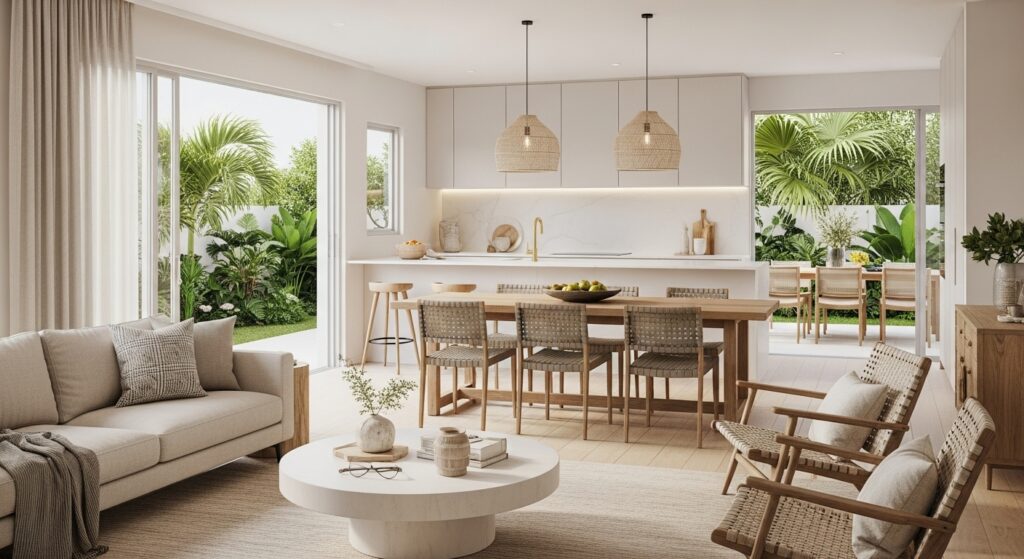
Case Example: Underfloor Heating in a Modern Open-Plan Kitchen-Diner
Imagine a home with a large kitchen, dining, and lounge area combined into one open-plan layout. With radiators, heat may pool around seating areas but leave the dining space cooler. However, with UFH:
- Heat spreads evenly across the entire floor.
- Large bi-fold doors are offset with well-insulated glazing, preventing draughts.
- Zoning allows the kitchen to be slightly cooler while the lounge remains warm and cosy.
- The absence of radiators frees up wall space for kitchen cabinets and furniture.
This demonstrates how UFH can transform open-plan living from a heating challenge into a comfortable, stylish solution.
Is Underfloor Heating the Right Choice for Your Open-Plan Home?
The decision depends on several factors:
- Budget: UFH is more expensive to install but can save on running costs long term.
- Lifestyle: If you prefer quick bursts of heat, radiators may be more practical. If you value consistent comfort, UFH excels.
- Property Type: New builds and major renovations are more suitable for UFH installation. Retrofitting in older homes can be disruptive and costly.
- Insulation Quality: The effectiveness of UFH is heavily dependent on insulation levels.
Final Thoughts
So, can underfloor heating handle the demands of open-plan living?
The answer is yes—provided it is properly designed, installed, and supported by good insulation. Underfloor heating not only meets the practical challenge of warming expansive spaces but also enhances the aesthetic and comfort of modern open-plan homes.
For homeowners seeking consistent warmth, energy efficiency, and design freedom, underfloor heating is an excellent choice. While the upfront costs may be higher, the long-term benefits make it a worthwhile investment for open-plan living.